

Before Executive Presence: What the Ursulines Understood About Human Development
Long before executive presence became a leadership competency, some educational institutions were already teaching its foundations. They simply used different language.
Looking back on my own education in Sibiu, it has become increasingly clear that many of the ideas I explore in Vitruvian Woman – presence, credibility, capability and character – have deep roots in the Ursuline educational tradition that shaped the school I attended.
My interest in education, leadership and human development has accompanied me for much of my life. It is therefore unsurprising that I continue to find strong parallels between the Ursuline philosophy and the themes of authenticity, authority and personal presence explored in Vitruvian Woman. Both approaches share a central conviction: that education is about shaping the whole person and not merely about acquiring knowledge.
The school I attended in Sibiu was housed in a former Ursuline convent, a building whose history extends far beyond its physical structure. Originally part of a Dominican monastic complex dating from the late fifteenth century, it later became an Ursuline institution before eventually being absorbed into the state system. Yet even after these transitions, the educational philosophy embedded within its walls remained remarkably intact.
To understand the influence this tradition has had on my work – and on the ideas developed in Vitruvian Woman – it is worth returning to its origins and exploring how a sixteenth-century educational vision continues to speak to contemporary questions of leadership, credibility and presence.
The Ursuline inheritance: history, formation, and the making of presence
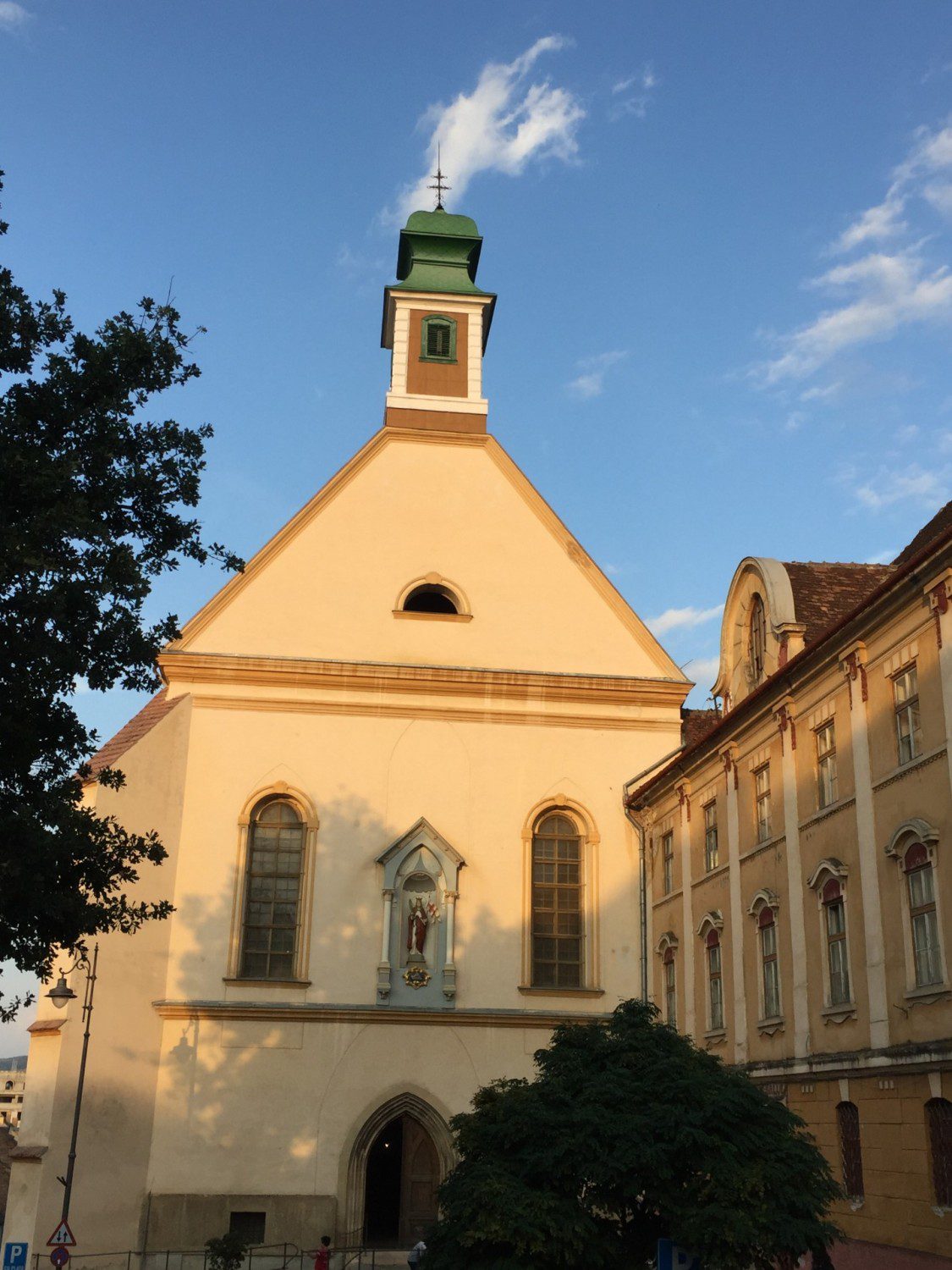
The beginning: educating girls was social infrastructure
The Ursuline tradition begins with Angela Merici, who in 1535 founded the Company of St Ursula in Italy with a premise that was, for that time, gently radical: that the education of girls was not peripheral but foundational to society.
This was not simply a charitable or devotional undertaking but a whole, structured proposition. At a time when formal education for women was limited, the Ursuline model placed equal emphasis on intellectual formation, moral development, and social responsibility. Education was conceived not as the transfer of knowledge, but as the shaping of judgement, character, and capacity for participation in the world.
As Ursuline schools spread across Europe in the seventeenth-and eighteenth centuries, they developed into a network of organised female education, combining discipline, academic rigour and a distinctly holistic view of the individual.
From mission to institution: the European expansion
By the time the Ursulines reached Central Europe, their role had shifted from a purely religious mission to what we would now recognise as cultural infrastructure. Convent-based schools and boarding institutions contributed to the formation of a socially coherent, educated female population. Literacy, learning, and development were embedded in this; they were an integral part of the approach.
This expansion coincided with the broader educational movement of the Counter-Reformation, which placed a renewed emphasis on structured learning, discipline, and values. In this context, the Ursuline contribution was distinctive: they elevated girls’ education to a level of seriousness comparable to that afforded to boys and did so through a system that integrated intellectual training with behavioural formation.
By the time their model reached Transylvania, it had already become a recognisable and respected form of educational provision.

In Sibiu, the Ursuline nuns established a girls’ school in the early eighteenth century, within a city shaped by German-speaking Saxon culture, layered religious identities, with nuances from Habsburg and Austro-Hungarian times – all enriching an overall Romanian influence.
The school adapted to this complexity with notable agility. Initially, teaching was primarily conducted in German, and later incorporating Romanian. It was effectively positioning education as a gateway to wider European participation.
This linguistic and cultural reach mattered. It connected education with mobility, and mobility with opportunity. For many students, Ursuline schooling represented both access and refinement.
At the same time, the institution developed a reputation for rigour. Discipline, conduct, intellectual training, and social comportment were treated as interdependent dimensions of education. The aim was not simply to instruct, but to form.

More formation, less instruction
That distinction – the difference between instruction and formation – remained central.
The Ursuline system operated as a complete model of development. It integrated intellectual knowledge, behavioural discipline, communication, judgement, and social responsibility into a coherent whole.
Students were not simply prepared to pass examinations but to be recognised, trusted and credible in society. In contemporary language, one might say that the system produced legibility, not only competence.
Looking back a few decades, what is striking, is how deliberately this was achieved. The curriculum extended beyond formal subjects to include posture, voice, expression, behavioural refinement, and interpersonal conduct.
Although these elements were never named as such, they collectively formed what I now describe as ‘presence’: the alignment between what one knows, how one behaves, and how one is perceived.
The continuity of an invisible curriculum
The institutional life of the Ursuline school in Sibiu ended abruptly in 1949, when religious schools were nationalised under the communist regime.
Yet the deeper educational logic never disappeared. When I joined, the building housed the pedagogical college, and the underlying ethos – discipline, integration, formation of the whole person – persisted in practice. When I was a pupil there in the late sixties (and later on a teacher in the early 90s) much of this work took place through what would today be called an ‘invisible curriculum’.
As students, we learned to communicate clearly and appropriately across contexts, to exercise judgement under pressure, and to demonstrate responsibility through practical accountability. We developed a sense of professional identity long before entering any formal profession.
Crucially, these capabilities were embedded in practice – in performance, in interaction, in expectation. There were few abstract concepts we were taught in the absence of practice – which also included one day a week spent on stage – debating, presenting, moving, dancing.
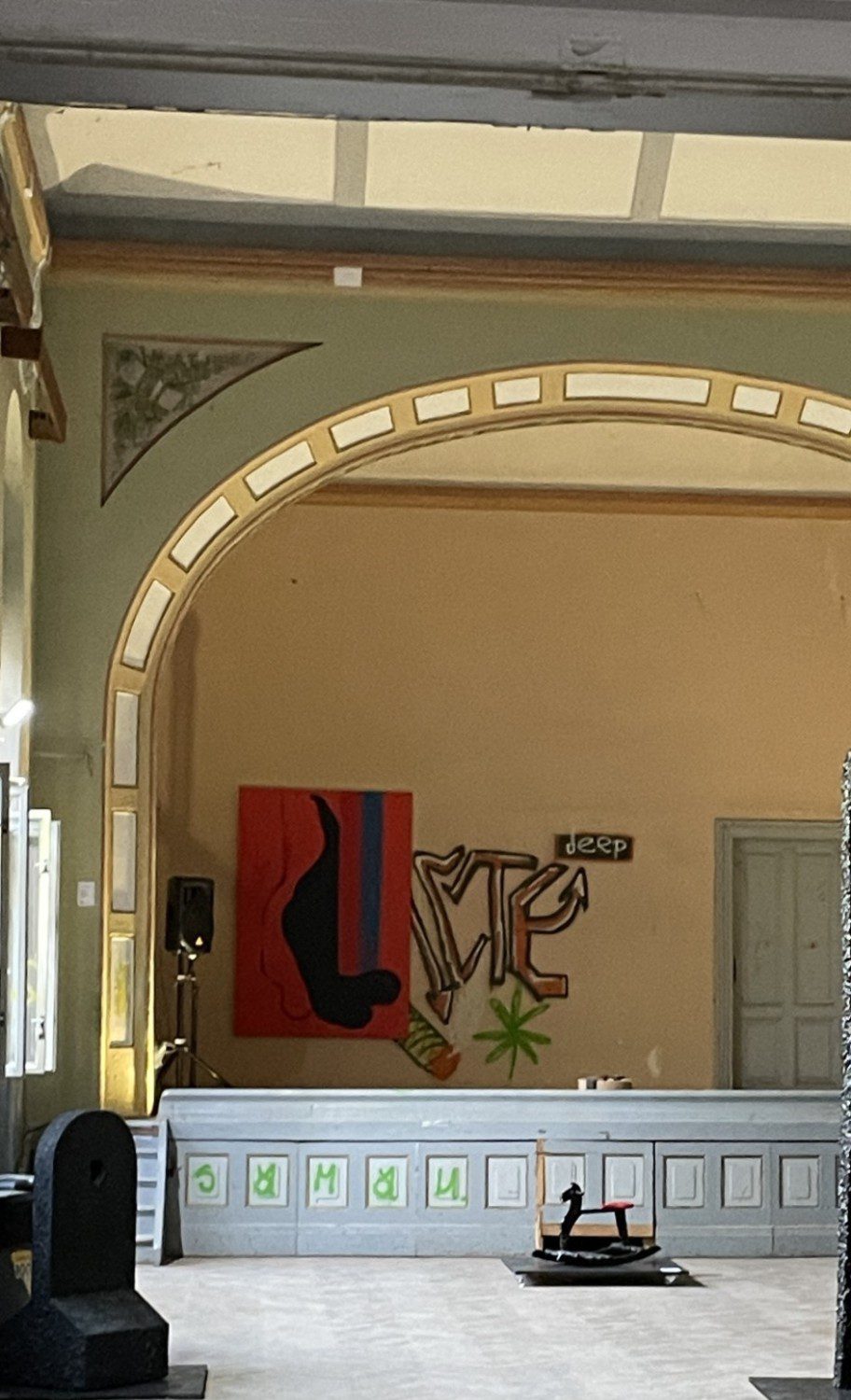
This is where the model diverges sharply from many contemporary educational approaches. Modern systems (business schools included), tend to excel at the transmission of knowledge, but remain less effective at ensuring that this knowledge is externally visible, credible and trusted.
The Ursuline system made capability observable from as early as six years of age, addressing every stage of development through a structured, incremental approach.
It was organic and, unsurprisingly, continuous as it had become coherent and imprinted at a structural level.
From Ursuline education to the Vitruvian Woman
With the perspective of time, it has become increasingly clear to me that the questions I explore in my work – and in Vitruvian Woman – are a contemporary articulation of what an old but progressive model cared about: capability, credibility, presence and achievement as a whole being.
What I now describe as image literacy – the ability to align behaviour, communication and appearance into a coherent and trustworthy signal – sits directly within this lineage.
Perhaps this is why the ideas explored in Vitruvian Woman feel less like a departure and more like a continuation of a much older conversation – one concerned not only with achievement, but with the development of the whole person. The language has changed, however, the challenge has not.
I would be interested to hear your perspective: what experiences, institutions or individuals have most influenced your own understanding of presence, character and leadership?
‘Vitruvian Woman: Redefining executive presence through the power of image literacy’ is available for pre-order now, ahead of its October 27 release.